Article
Buying a luxury property in France: what comes on top of the asking price
The prettiest part of the listing is rarely the whole story
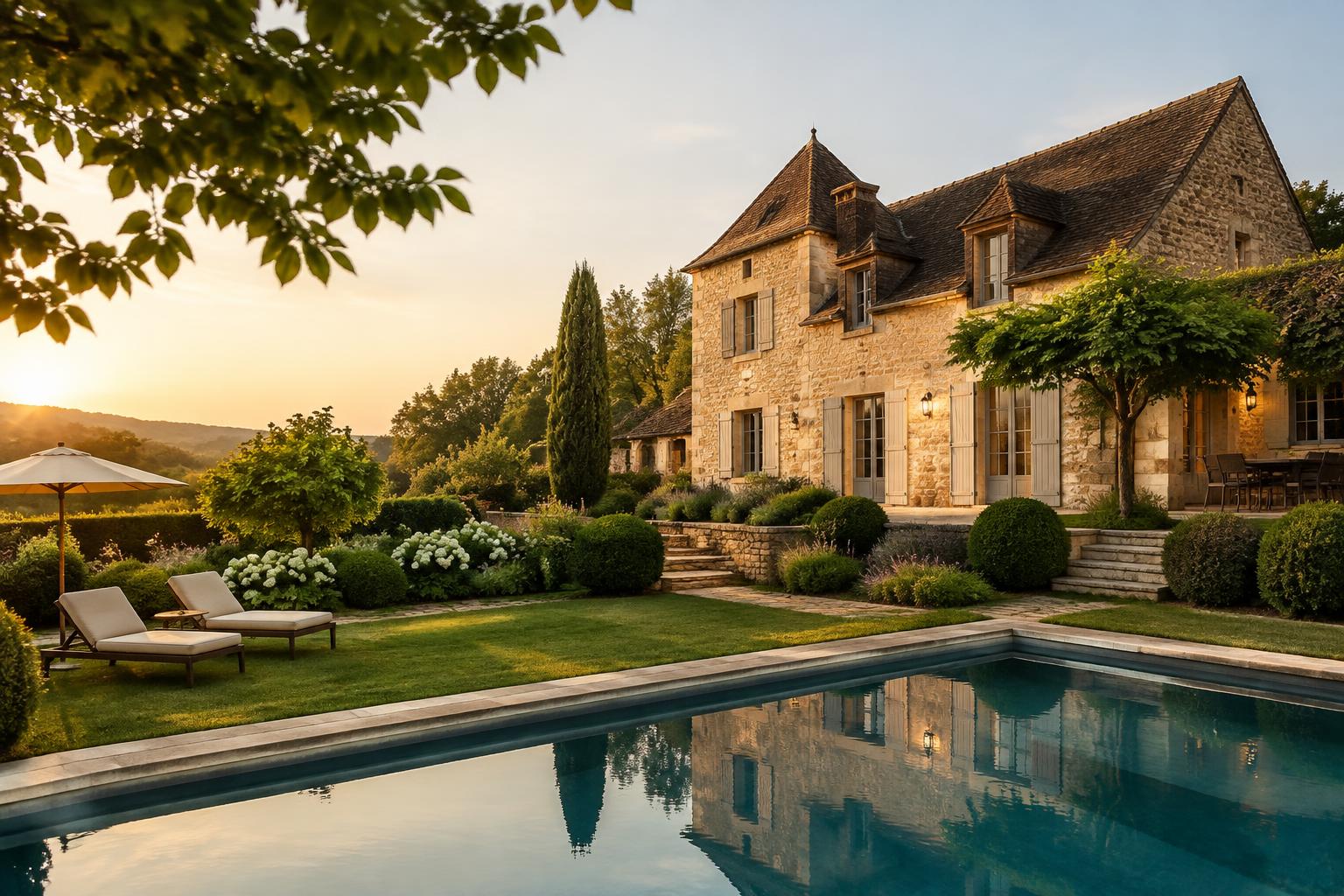
A stone house with a pool, a large terrace and a view over the hills. Anyone looking for luxury property France finds homes like this in the Dordogne, Lot and Corrèze — and sees immediately why they appeal.
But the asking price is not the whole amount. For a luxury home for sale Dordogne with a pool, guest house, generous terrace and land, there are costs that a plain house doesn't carry: mandatory pool safety, upkeep of terrace and garden, annual tax on a second home, possibly wealth tax, and the question of whether and how you may let it out.
This article lists the checks and the official French rules that come with a high-end home. Not to make things complicated, but so you know what you are actually buying — and what it asks of you, year after year, once you own it.
Have you got your eye on a home with a pool, guest house or generous outdoor space? Email us the listing link and your main question. We'll check what this property asks beyond the asking price.
Email us about this home1. What a high-end home asks for attention
Valuation is the notary's or a surveyor's job, not a listing photo's. For a maison de prestige, it pays to draw up a sober list in advance of what actually belongs to the property and what you can ask to see.
- What is actually present? Pool, terrace, guest house or gîte, barn, garage, gate, irrigation, lighting, fencing. Note the build year, condition and supporting documents for each element.
- Are there permits and completion certificates? A pool, outbuilding or veranda often needs a permit in France. Ask for the permit itself plus the confirmation of completion (déclaration attestant l'achèvement).
- What has been maintained? Quotes, invoices and warranties for roofing, façade, the pool installation, heating and groundwork.
- What doesn't show in the photo? Water supply and drainage, sewage, electrical capacity, internet connection at the exact address, and the access road.
For a large plot, ask not only about the number of square metres but about how it's laid out: lawn, planting, terraces, slopes, trees and water. Each element needs different upkeep, and so a different budget.
2. Work out the total purchase price
For an existing home, French notaries generally work with 7 to 8% purchase costs as a general guideline, not a fixed rate. [1]
Transfer tax in Dordogne, Lot and Corrèze. Since 1 April 2025, départements may temporarily raise the departmental rate from 4.50% to 5.00%, through to 31 March 2028. [2] The official tax authority rate table (updated 1 June 2026) lists a departmental rate of 5.00% for Dordogne, Lot and Corrèze. [3] Added to the other, smaller components, the total registration percentage comes to around 6.32% of the purchase price for a buyer who already owns a home, against roughly 5.81% where the reduced 4.50% rate applies. [4]
That reduced 4.50% rate only applies under conditions, for someone buying their own main residence for the first time; it is not a general discount for every buyer of a second or holiday home. Have the notary assess, case by case, whether you qualify. [4]
Worked example, not a quote: for a purchase price of €600,000, 6.32% is roughly €37,920 in transfer tax; at 5.81% it's roughly €34,860. With the statutory notary fee and additional formalities, the total usually falls around the 7 to 8% mentioned, so roughly €42,000 to €48,000 at this price. [1] Financing, any separate agency fees, buying assistance, moving costs and works are not included here. The notary determines the actual amount for your purchase.
Ask for these figures before making an offer:
- A current cost estimate from the notary, for this specific property.
- Written quotes for necessary works, with clarity on VAT and what is or isn't included.
- The latest taxe foncière bill; it is charged to whoever owns the property on 1 January, and any pro-rata split over the year is an agreement between buyer and seller, not an automatic rule. [5]
- For a second home: the taxe d'habitation bill on secondary residences. [6]
A brief note on wealth tax. Above a net French and, for households fiscally resident in France, worldwide property wealth of €1.3 million per household on 1 January, the impôt sur la fortune immobilière (IFI) applies. A second home in France counts towards this. This is a general rule of thumb, not a personal calculation; have a tax adviser assess your situation. [7]
3. What a pool, terrace and garden ask for every year
A pool must be secured by law. Every in-ground, uncovered private pool — whether for individual use or for collective but private use, such as on an estate with several homes — must have an effective drowning-prevention system: a barrier, an alarm, a safety cover or a shelter. A barrier meeting standard NF P90-306 is deemed to satisfy the requirement. A missing or faulty system carries a fine of up to €45,000. [8]
Ask at a viewing which system is installed, whether it's maintained, and whether there are documents to go with it. A missing system is not a minor point: it's a legal obligation and a safety matter for your own guests and children.
Terrace, garden and grounds have no legal upkeep standard; you work out the budget yourself. Before making an offer, have a landscaper or grounds manager look at the outdoor space, with a quote for lawn and planting, terraces and paving, drainage, pool upkeep, fencing, gate, lighting, irrigation and the access road.
Wastewater. If the property is not connected to the public sewer, the seller must give the notary a SPANC report less than three years old. If repairs are needed and the owner sells without carrying them out, the buyer must bring the installation up to standard within one year of the final sale deed. [9]
Insurance. There's no statutory insurance requirement for a standalone home as there is for a flat in an apartment building, but you remain liable to third parties for damage arising from your property. With a pool, guest house, many visitors or staff, targeted cover is worthwhile — ask for quotes before making an offer, not after.
Security of the home. For a remote or sprawling property with outbuildings, it's practical to look ahead of time at lighting, alarm options and access for emergency services. This is not a legal requirement, but a practical consideration that comes up more often with larger estates.
Unsure about the yearly cost of a pool, terrace and garden? Email us the listing link and what you're planning for the grounds. We'll map those costs out for you.
Email us about these grounds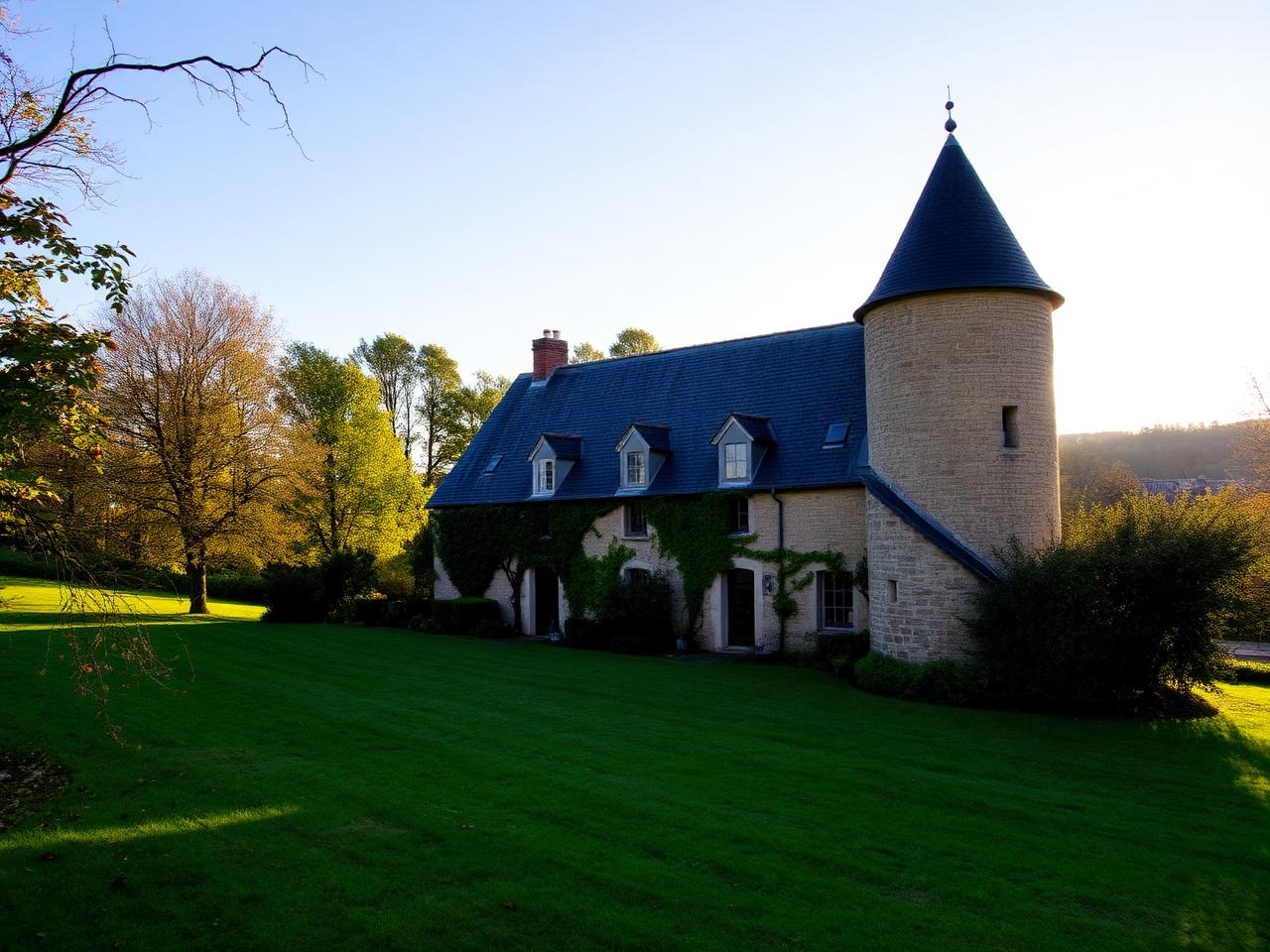
4. Guest house or rental: what's officially involved
Many buyers of a high-end home think about a guest house, a gîte, or a period of rental. That's possible, but it's not a formality.
What a meublé de tourisme is. This is a home you let for short, successive periods to passing guests, for their exclusive use, with a maximum of 90 consecutive days per guest per calendar year. [10] A 'gîte rural' is not its own legal category; in practice such a let usually falls under these rules. [11]
Declaration and registration number. You must declare a meublé de tourisme to the tax authorities and, depending on the municipality, to the mairie. Since the law of 19 November 2024 (the Le Meur law), a declaration with a registration number via a national online service applies; this procedure must be in place everywhere in France by 20 May 2026 at the latest. If you let your main residence, you must prove this in the declaration, for instance with your income tax statement for this address. [12, 13]
Main residence versus second home. If you let your own main residence as a meublé de tourisme, an annual limit of 120 days per calendar year applies; the municipality can lower this to 90 days by a reasoned decision. This is an annual limit for the whole property, not a separate number of days per individual guest. If you let a second home, this annual limit does not apply, but the declaration requirement and any municipal rules still do. [13, 14]
Municipal restrictions. Depending on local housing-market pressure, municipalities can require a change-of-use permit, set quotas or ask for compensation. Check this with the mairie before counting on rental income. [12]
DPE and label G. For homes under an ordinary tenancy (the tenant's main residence, furnished or not), a home with energy label G may no longer be let since 1 January 2025, including on renewal of an existing lease; label F follows from 2028 and label E from 2034. [15] For new meublés de tourisme subject to a change-of-use permit, label G has also been disallowed since the same date. So this ban doesn't automatically apply to every holiday let; have your situation checked with the municipality. [16]
5. Energy, diagnostics and what gets tested
The mandatory diagnostic file (DDT). The sale of a home comes with a file of surveys: electrics and gas for older installations, lead for buildings before 1949, asbestos for building permits before 1 July 1997, termites in designated zones, energy label, natural and technological risks, and the state of non-collective sewage where applicable. [17]
Energy label (DPE). A DPE is mandatory for homes of 50 m² or more that are occupied more than four months a year. A DPE from before 1 July 2021 is no longer valid; DPEs from that date onward are in principle valid for ten years. [18]
Energy audit, and exactly who it's for. For the sale of an individual home with label E, F or G, or a building with several homes held by a single owner ('monopropriété'), an energy audit has been mandatory since 1 January 2025 alongside the DPE; for label F or G this has applied since 1 April 2023. This obligation doesn't automatically apply to a single unit within a multi-owner co-ownership (copropriété). Have special ownership situations, such as an estate with several separate cadastral units, checked by the notary beforehand. [19, 20]
The audit must already be offered at the first viewing and is attached to the preliminary sale agreement. It sets out improvement routes and cost estimates, not a contractor's quote. Compare which works tie together and what's feasible in an old or characterful building.
Risks at the exact address. Check the official risk statement (état des risques) and the Géorisques map for the precise address: flooding, ground movement, drought, wildfire and technological risks.
Have structural doubts checked separately. The diagnostic file is a legal minimum list, not a structural survey. If you have doubts about the structure or are planning major renovations, bring in an independent expert.
6. Ownership, boundaries and rights on a larger property
What the notary checks. The notary reviews the title deed, the mortgage register, planning rules, the cadastral situation and the municipality's pre-emption rights; for rural properties, a possible pre-emption right held by SAFER also comes into play. Don't assume from the word 'estate' or the number of hectares alone whether or not this applies.
Outbuildings and designated use. A large barn or outbuilding can be appealing as a studio or guest house, but being there is not the same as being allowed to use it that way. Ask the mairie about the current designated use and whether your plan fits local rules. A change of use without altering the façade or load-bearing structure generally needs a déclaration préalable; combined with changes to the façade and/or load-bearing structure, a permis de construire is needed.
Boundaries and third-party rights. A boundary survey (bornage) is not legally required for every sale and can only take place between two different owners. For a property with a lot of land, it's worth asking whether a procès-verbal de bornage already exists and, if not, whether a géomètre-expert can establish the boundaries. Also watch for easements: rights of way, pipelines or third-party rights don't always appear in the land registry and sometimes only emerge from older title deeds.
What's included in the sale. Put in writing what stays: kitchen, built-in appliances, pool robot, garden furniture, lighting, artwork. Items seen in the photos aren't automatically part of the deal.
Contract and timeframes. An accepted offer is usually followed by a compromis de vente or promesse de vente. A non-professional buyer has, in the legally defined cases, a ten calendar day cooling-off period, with a start date that depends on the form of notification. Anyone financing with a loan gets their own period under a statutory financing condition, which may not be shorter than one month; Service Public cites 45 to 60 days as a usual period, without guaranteeing it. Have the notary confirm the exact dates for your file.
Checklist: what to know before offering on a high-end home
Note the answer, the supporting document and what's still open for each point.
- Budget: do I have a current notary estimate, with the transfer tax rate that applies to me?
- Annual charges: have I seen the taxe foncière and, for a second home, the secondary taxe d'habitation, and checked whether my municipality applies any surtax?
- Wealth: do I know whether my French property wealth could exceed the IFI threshold of €1.3 million?
- Pool: is there a mandatory safety system, which type, is it maintained, and with what documents?
- Grounds: do I have a quote for upkeep of terrace, garden, trees and land?
- Permits: are the pool, outbuilding and veranda officially permitted, completed and signed off?
- Sewage: is the SPANC report less than three years old, and is it clear what works are needed?
- Energy: do I have a valid DPE and, where applicable to an individual home or a building in single ownership, the full energy audit?
- Rental: has my plan for guests or letting been checked against the declaration, registration number, the annual limit for a main residence and the DPE rules?
- Risks: have I checked Géorisques and a current état des risques for this exact address?
- Land: are plots, boundaries, access and third-party rights clear; is there a boundary survey?
- Insurance: do I have a quote for suitable cover given the pool, guest house and visitors?
- Contract: have my conditions, financing and timeframes been explained before signing?
Got your eye on a high-end home?
You don't have to work it all out yourself. Send us the homes you've found and tell us what appeals to you about them. Bureau Moulin requests information from the agent, checks the grounds, permits, rights and annual charges, and helps you make a careful selection. Bureau Moulin carries out the viewings itself and, if you wish, guides the negotiations and the process through to the notary.
Our search focuses on high-end homes and estates in Dordogne, Lot and Corrèze, within at most an hour and a half's drive of Brive. If you plan to settle in France after the purchase, Natascha can also guide you through the administrative steps.
Shall we discuss your buying plans? Email Ruud and Natascha your listing link or search criteria and your main questions. You're welcome to get in touch even if you haven't chosen a home yet.
Email Ruud and NataschaSources
Checked on 15 October 2026. General information for the private purchase of an existing high-end home in mainland France, not personal legal, tax or structural advice. Rental plans, wealth tax, second-home taxation and protection statuses depend on the municipality and your personal situation; have these confirmed by the notary or a tax adviser before purchase. Rates and timeframes may change.
- Notaires de France — notary fees when buying an existing home
- Service Public — temporary increase of the departmental transfer tax
- Tax authority — official transfer tax rate table by département
- Tax authority — explanation of registration rates and notary fees
- Service Public — taxe foncière, who pays and when
- Service Public — taxe d'habitation on second homes
- Tax authority — calculation and threshold of the IFI
- Service Public — mandatory safety system for private pools
- Service Public — SPANC report and remediation period
- Service Public — second home as a meublé de tourisme
- Directorate General for Enterprise — definition and rules for meublés de tourisme
- Légifrance — law no. 2024-1039 of 19 November 2024 (Le Meur law)
- Service Public — main residence as a meublé de tourisme, annual limit
- economie.gouv.fr — rules for a meublé de tourisme in a main residence, 2026 changes
- Service Public — DPE, validity and letting ban for label G
- Service Public — new rules for holiday lets in 2025
- Service Public — mandatory diagnostics when selling a home
- Service Public — energy audit when selling a 'thermal sieve'
- French Ministry of Ecology — mandatory energy audit, scope