Article
Buying property in the Dordogne: assessing the region and the house
A house for sale in the Dordogne: more than the landscape
Anyone searching for a house for sale in the Dordogne or buying property in the Dordogne mostly finds listings. That makes sense: you're looking for a home. But before making an offer, it matters just as much to understand the area, the building style and a few practical checks specific to this region. A characterful house in Périgord Noir doesn't always call for the same checks as a comparable property in the Corrèze.
We are Ruud and Natascha Meulenberg, two specialists working under one roof, guiding buyers and sellers in the Dordogne, Lot and Corrèze, within one and a half hours of Brive. We do the viewings ourselves and speak plainly about what's wrong with a property, too. Buyers often send us a house they've already found themselves, and we then look together at whether a viewing is worthwhile.
This article is not about the buying process itself — you'll find that in our article on buying a house in France. Here the focus is the region: what Périgord Noir, Blanc, Vert and Pourpre actually mean, what to watch for with stone and lauze roofs, and which regional checks belong in a thorough viewing.
Still defining your search area? Tell us which area appeals to you and why.
Email usPérigord Noir, Blanc, Vert and Pourpre: orientation, not a label
The Dordogne department is often called Périgord, split into four informal areas: Périgord Noir around Sarlat (dense oak forests, tourism, higher prices), Périgord Blanc around Périgueux (the prefecture and its surroundings), Périgord Vert in the north towards Nontron (forests, quiet, river valleys) and Périgord Pourpre around Bergerac (wine country). These are geographic labels from tourism and local usage, not an official administrative or tax division. Don't rely on them alone — check the actual commune, amenities and price level yourself.
Our own search area deliberately crosses these four directions: we look within one and a half hours of Brive, so also in the neighbouring Lot and Corrèze. A village just across the department border can sometimes match your everyday needs better than an address further into the Dordogne itself.
Building style: stone, lauze and tiled roofs
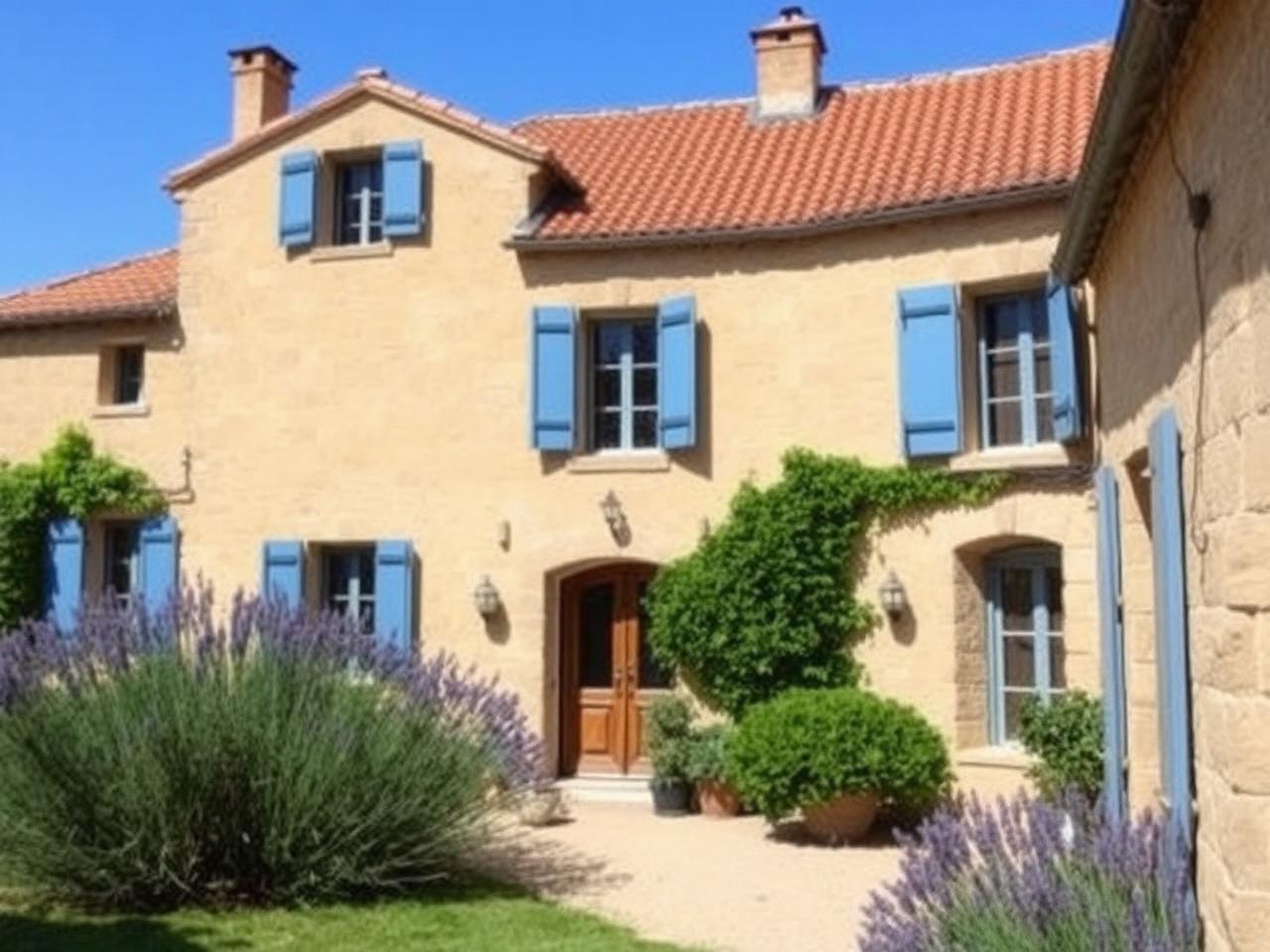
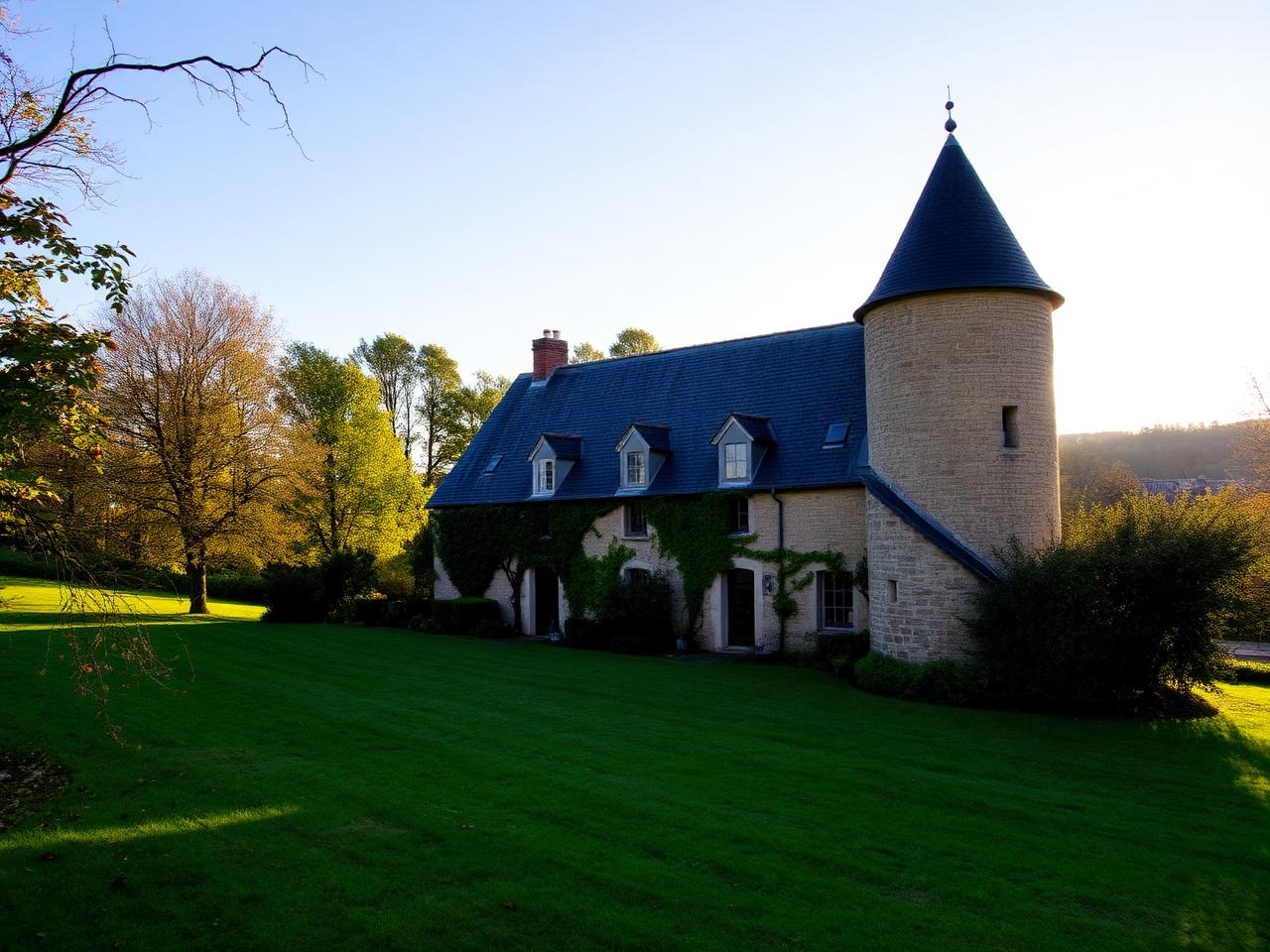
Many houses in the region are built of local limestone, often with shutters in muted colours. Roofs were historically covered with lauze (heavy limestone slabs) or the characteristic French curved tile; in Périgord Noir, steep lauze roofs are most common, while tiles dominate elsewhere. A lauze roof is heavy and requires a solid, often centuries-old roof structure: if there's any doubt about the frame, always have a professional check it, separately from the standard technical file supplied by the seller.
Old construction methods with stone and lime mortar breathe differently from modern building: a certain moisture regulation through the walls isn't automatically a defect. Always ask pointed questions about recent work on façades, repointing or insulation: unsuitable materials (such as cement mortar on a lime-and-stone wall) can actually make damp problems worse.
Risks at the exact address: flooding and clay soil
As anywhere in France, request the état des risques for a house in this region and check the Géorisques map at the exact address. In the Dordogne and along the Vézère, Isle and Lot valleys, flood risk (PPRI, the flood risk prevention plan) is relevant in many places; that doesn't mean every house near a river is at risk, but it's worth checking per parcel.
A second point found across much of France, and so here too, is retrait-gonflement des argiles: clay soil that shrinks in dry periods and swells when wet, which can cause cracking in façades. More than half of mainland France lies in a zone of moderate to high exposure to this phenomenon [1]. The risk is listed in the état des risques; if a house shows visible cracks, it's worth asking the seller specifically, and possibly bringing in an expert.
Already found a house you like? Send us the link and your questions about risks, drainage or access.
Email usWastewater in the countryside: SPANC, wells and springs
Outside village centres, houses in the Dordogne, Lot and Corrèze are often not connected to the mains sewer but have their own treatment system (a fosse septique or similar). The corresponding SPANC report (the inspection of the individual wastewater system) must be less than three years old when the final deed of sale is signed. If repairs are needed and are not carried out before the sale, the buyer must bring the system up to standard within one year of the deed [2]. Always request this report early; fixing a rural wastewater system can be a significant cost.
Some rural houses in the region have their own well or spring, in addition to or sometimes instead of the public network, for example for the garden. Ask about the water's origin, the state of the well and whether analyses are available; this is something to assess per property, not a general guarantee.
Access roads and rights of way
Many appealing houses in the region sit at the end of an unpaved or narrow road, sometimes shared with neighbours. Always ask: is the access road public or private, who maintains it, and is there a registered right of way (servitude de passage) if the road crosses someone else's land? Drive the road yourself, ideally also after rain, and ask the notary to confirm the documents on access and rights of way before making an offer.
Protected zones around monuments: abords and the ABF
The Dordogne has many protected churches, châteaux and village centres. If a house lies within a delineated protection zone around a monument historique, or — failing that — within 500 metres and in sight of such a monument, works affecting the exterior require prior approval from the architecte des Bâtiments de France (ABF) [3][4]. This covers façades, roofs, exterior joinery and sometimes gardens, and can affect colour choices, materials or a planned renovation. Check with the mairie or the Atlas des patrimoines whether a house lies in such a zone, and discuss any renovation plans with the ABF via the commune before buying — this is a nuance, not a blanket ban on building work.
Seasonal life and the second-home tax
Many buyers in the Dordogne first use their house as a second home. Bear the seasonal rhythm in mind: villages and markets are lively in summer, while outside peak season some amenities keep shorter hours. On a winter viewing, also ask how the village functions in summer, and vice versa.
On the tax side: taxe d'habitation on main homes has been abolished since 1 January 2023, but it remains payable on a second home (taxe d'habitation sur les résidences secondaires, THRS); the amount varies by commune [5]. Separately, the owner on 1 January of each year owes taxe foncière for the full year, regardless of a sale later that year; buyer and seller can agree a pro-rata split between themselves, but that agreement does not change who is liable to the tax authorities.
Distance to amenities and airports
For those coming from further away, accessibility and amenities matter. The region has, among others, Brive Vallée de la Dordogne airport in the Corrèze and Bergerac Dordogne Périgord airport in the Dordogne [6][7]. Both offer scheduled flights, including to Paris-Orly and a few other European destinations; the current offering varies by season and year, so check flights and frequencies directly with the airport before relying on them for your plans. For everyday amenities — doctor, supermarket, school — we recommend testing the drive time to the nearest village and town yourself during a viewing, rather than going by map distance.
Preparing a viewing in the region
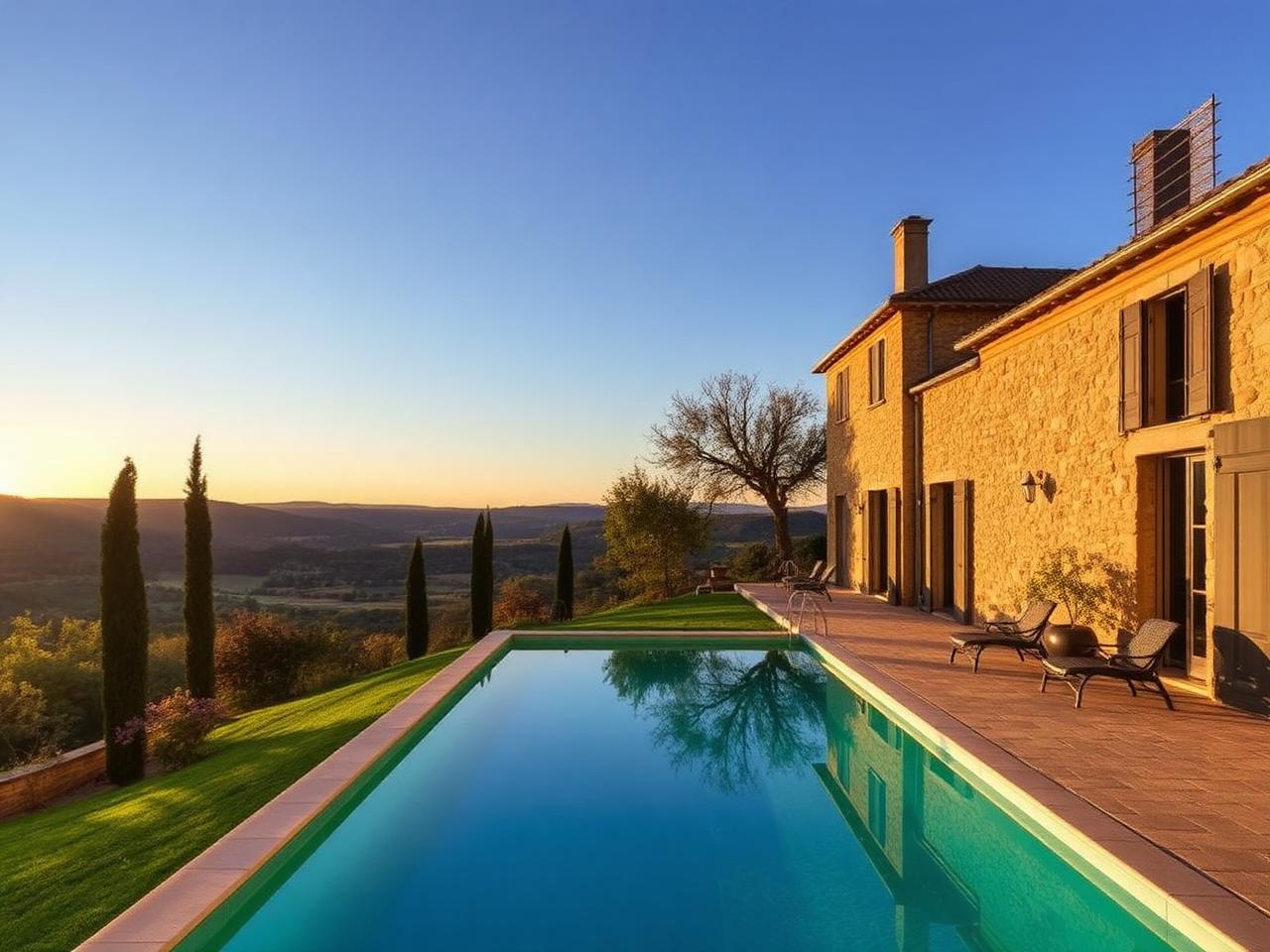
A thorough viewing in the Dordogne, Lot or Corrèze starts before the trip. Request the technical file, the SPANC report and the état des risques in advance. Check the location on Géorisques and the Atlas des patrimoines for any ABF restrictions. During your visit, drive the access road yourself, even if it looks short on the map, and walk the plot to see where boundaries, paths and any shared sections lie. Ask specifically about seasonal use of water and wastewater, and what the house needs in terms of upkeep in winter and in summer.
Checklist: region-specific points for your visit
- Location: which informal Périgord area or department (Dordogne, Lot, Corrèze) is the house in, and does that fit what I want?
- Risks: what does Géorisques show at this exact address, and is there a valid état des risques with PPRI and clay-risk information?
- Building: is the roof lauze or tile, and has the frame been recently assessed by a professional?
- Wastewater: is there a SPANC report less than three years old, and is it clear whether repairs are needed?
- Water: is there a private well or spring, and is the quality and origin of the water known?
- Access: is the access road public or private, and is a right of way registered?
- Heritage zone: does the house lie within a delineated abords zone or within 500 metres of a monument historique, with ABF approval needed for exterior work?
- Tax: is it clear which tax (taxe foncière, and possibly taxe d'habitation as a second home) applies?
- Accessibility: have I personally tested the drive time to the village, town and possibly the airport, ideally in both seasons?
Want to discuss your plans for the Dordogne, Lot or Corrèze? Email us your search area, a house you've found, or your questions about the region.
Email Ruud and NataschaSources
- Géorisques — retrait-gonflement des argiles (checked 15 October 2026)
- Service Public — SPANC report and remediation period at sale (checked 15 October 2026)
- Ministère de la Culture — works in the abords of a monument historique (checked 15 October 2026)
- Service Public — authorisation for monuments historiques and their abords (checked 15 October 2026)
- Service Public — taxe d'habitation on second homes (checked 15 October 2026)
- Aéroport Brive Vallée de la Dordogne — official website (checked 15 October 2026)
- Aéroport Bergerac Dordogne Périgord — official website (checked 15 October 2026)